Role: UX Design Intern
Team: 4 Senior Designers, 1 Senior UX Design Manager
Timeline: 13 weeks
Date: June - September 2025
About
SOLIDWORKS is a 3D CAD software used internationally to design products across various industries.
With almost 8 million users worldwide, SOLIDWORKS is used by manufacturers, engineers, and designers in many industries ranging from aerospace to consumer goods. As a CAD (computer-aided design) software, users can speed up product development by designing 3D models and running simulations.
Overview
Improving onboarding by guiding users to the right learning resources.
I explored how onboarding can be automated to show users the appropriate learning content based on their skills and needs. I was previously an intern at SOLIDWORKS on the technical documentation team, so I was highly familiar with the variety of available learning resources and saw how overwhelming it can feel for users to navigate. Through competitive analysis, analogous research, and co-design workshops, I created solutions that prioritized personalization and reduced decision-making for users.
Problem
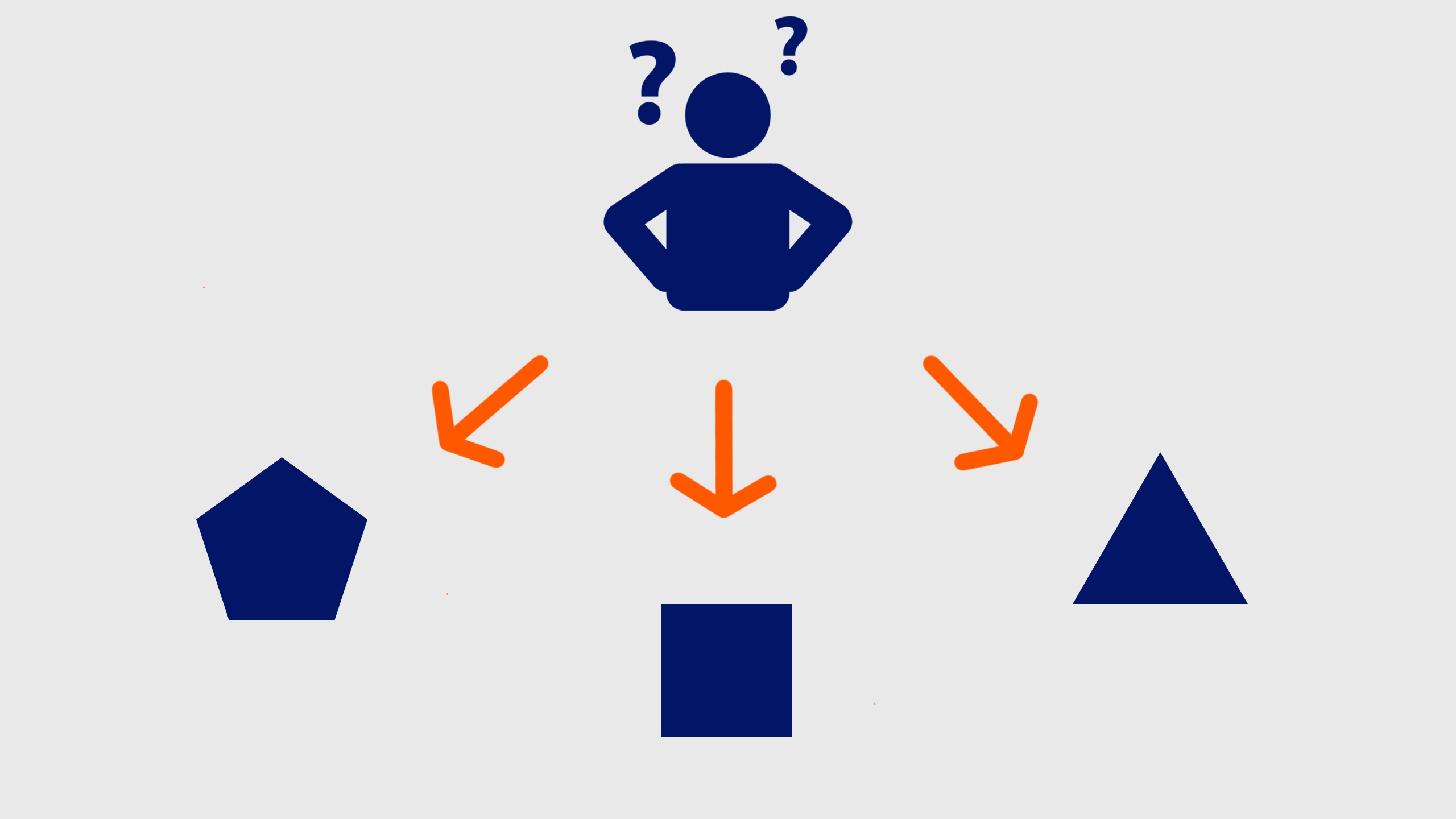
Users lacked direction when trying to navigate available learning resources.
SOLIDWORKS has a large collection of resources across multiple different platforms. However, users had to go looking for content that was relevant to them. Beginners couldn’t find a starting point, and intermediates couldn’t quickly identify content for their skill level.
Icon credit: confused man by Akshar Pathak from Noun Project (CC BY 3.0)
Solution
Guiding users by providing personalized recommendations.
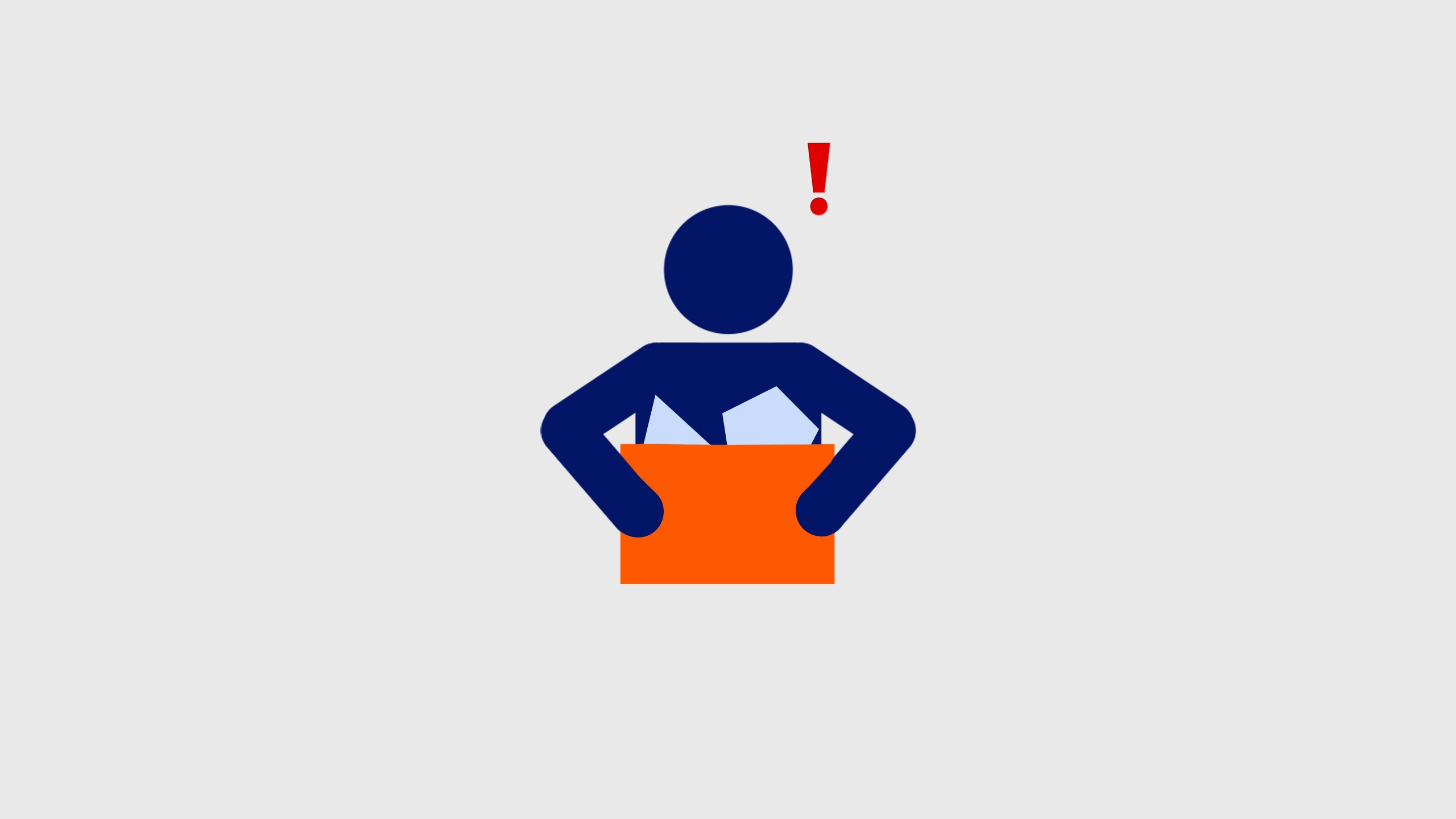
By having SOLIDWORKS provide recommendations of learning content for users based on their goals and skill levels, users can think less about how to learn and just start learning. Recommendations get increasingly personalized as users continue learning and exhibit preferences.
Research goal
Understanding what drives users to learn.
Before users can start learning, they first need the motivation to engage. I focused on understanding why people choose to learn and utilizing those motivations to inform more effective onboarding solutions.
Competitive analysis
Identifying key factors to onboarding approaches across different products.
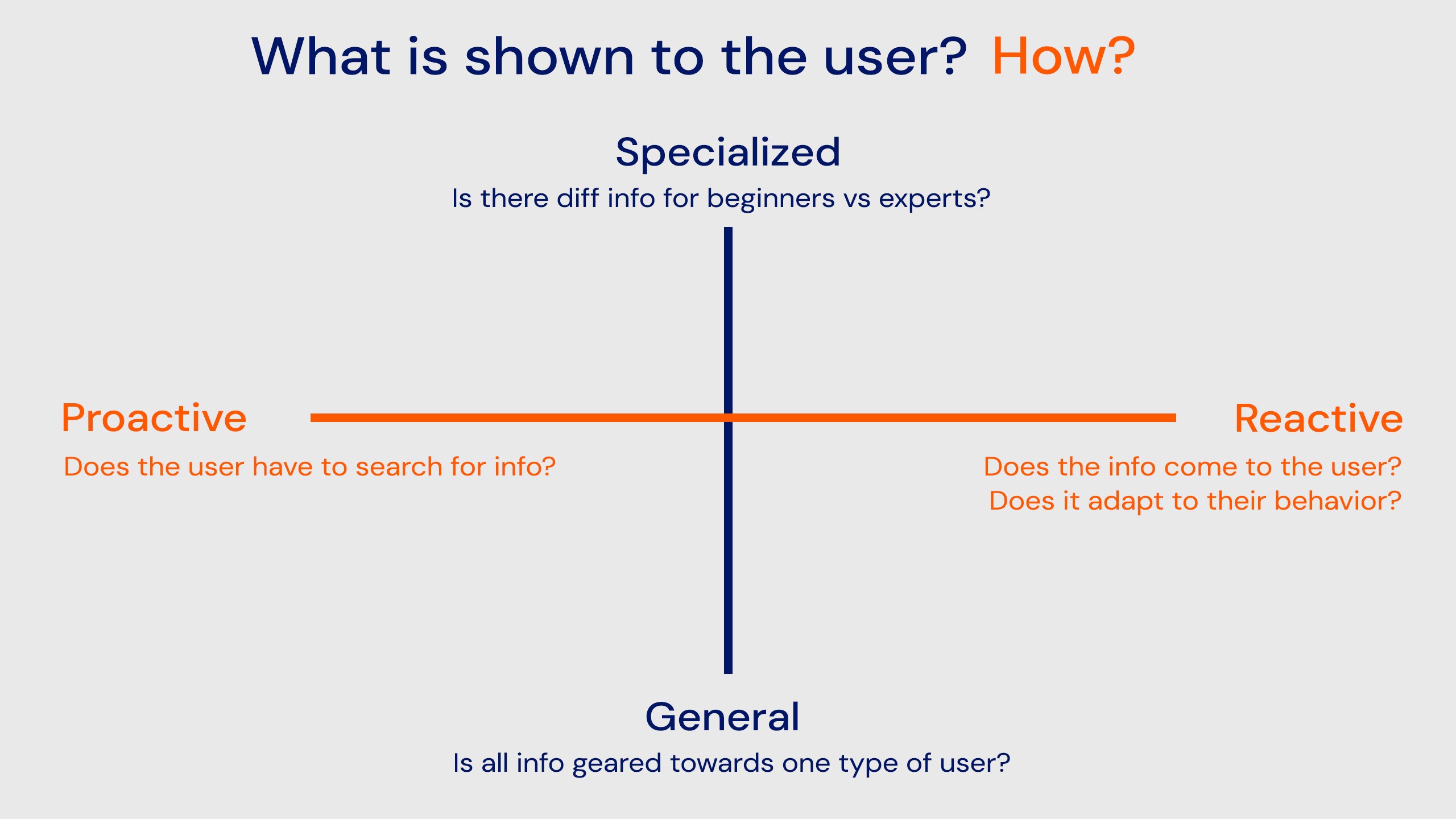
While examining other products similar to SOLIDWORKS in complexity (wide variety of features) and depth (individual features have extensive functionality), I noticed that each product’s onboarding approach is defined by two factors: the information shown to users and the way it’s delivered. Creating the graph below helped me identify a product’s positioning and uncover gaps in SOLIDWORKS’ onboarding.
Analogous research
Analyzing video games to see how learning can be exciting.
I started to think about other contexts where learning plays a big role, and landed on something I enjoy frequently in my free time: video games! They’re a great example of how people can be highly motivated to learn complex mechanics. Additionally, game designers have the responsibility of determining what information is shown, how it’s delivered, and when it appears. Analyzing these approaches inspired my ideas on motivating users and structuring learning.
Co-design workshop
Leading a collaborative workshop to discover the best available resources.
Finally, I planned and led a collaborative design workshop to see what users identify as the most helpful learning resources. I asked participants to sketch their ideal page with the prompt: “If you could give a new user a box of tools to learn SOLIDWORKS, what would be in it?”
To encourage creativity and discussion, I included:
A round of Pictionary to warm up
Participants explaining their sketches to the group
Casual sticky-note critique and refinement
I piloted the workshop first with my UX team, iterated the format, and then conducted it again with interns across different roles. In total, I collected ~10 sketched concepts with priorities, preferences, and frustrations.
Insights
Users learn best when information is directed, contextual, and fun.
Not only does learning content need to be curated and recommended to users based on their goals, but it should also be provided when the user is in the correct context (e.g., using a feature for the first time). Users will also engage more when they find the learning experience playful and fun, like a video game.
Impact
Transforming onboarding from a fragmented learning environment into an interactive experience.
By the end of the summer, I delivered a set of design proposals that reorganized and personalized learning content to help users spend less time searching for resources and more time actually learning.
Reflection
Holistic + iterative thinking.
Think in systems: I learned to consider the entire product ecosystem, leveraging available assets to reduce bloat and increase visibility of underutilized content.
Fail fast: I learned to iterate quickly early on within the design process and focus on big-picture goals. Early “failures” gave me more data to work with, which led me to more effective solutions faster.