made with joy by Vania

Tufts News

Features for a news aggregator to create an engaging news experience for Gen Z.

Senior Capstone at Tufts University, 2026.

Features for a news aggregator to create an engaging news experience for Gen Z.

Senior Capstone at Tufts University, 2026.

Features for a news aggregator to create an engaging news experience for Gen Z.

Senior Capstone at Tufts University, 2026.

Role

Co-Product Manager + UX Designer

TEAM

Ashley Wu, Lauren Wu, Anh Hoang

TIMELINE

5 months, January 2026 - May 2026

TOOLS

Figma, FigJam, ChatGPT, Notion

Project Overview

Designing AI-powered News
Experiences for Gen Z

For my senior capstone at Tufts University, I was mentored by Diane Theriault, Technical Lead on the Google News team. My team created features that complemented Gen Z’s existing news habits and investigated perspectives on AI usage in digital news.

As a co-product manager, I helped define project direction, broke down milestones into actionable tasks, coordinated team timelines, led client meetings, and aligned the team on core product philosophy.

This work is not affiliated with Google/Google News, and is strictly for educational purposes.

Project Overview

Designing AI-powered News Experiences for Gen Z

Developed during a 36-hour producthon, UniMed translates and provides credible explanations
of medical tests.

As the UX Researcher, I found that language barriers contribute to lower health literacy, which resulted in higher health risks. My insights created some of UniMed’s core features: medical test explanations and translations from credible sources.

Problem

Gen Z struggled to find trustworthy context within their existing habits.

Below is one example of a typical fact-checking workflow.

KEY INSIGHTS

We assumed users avoided news.

Flip the cards below to reveal what we actually found.

KEY INSIGHTS

We assumed users avoided news.

Click the cards below to reveal what we actually found.

Gen Z primarily consumes news through social media.

75%

of interview participants used a form of
legacy media regularly.

Gen Z primarily consumes news through social media.

75%

of interview participants used a form of
legacy media regularly.

Gen Z avoids the news,


75%

of interview participants used check the news
on a daily basis.

Gen Z avoids the news,


75%

of interview participants used check the news
on a daily basis.


Users had their own news diet, but too much friction stood in the way.

KEY INSIGHTS

We assumed users avoided news.

Click the cards below to reveal what we actually found.

Users rely on manual searches to
fact-check information.

“I’d search [for the info], check if there’s a news article from a reputable source, click into it, skim the first 3 sentences, then go back to TikTok.”

Simplify path between content and trustworthy news.
Users expected personalization without extra effort.

50% of participants independently referenced an “algorithm” when describing how they expected a news feed to work.

Personalize feed automatically over time.
Social media users valued trustworthy news, but existing habits were easier.

“I like the idea of a news aggregator, but I don’t want to deal with paywalls and already pay for [legacy media publisher].”

Bring the news to the user. Not the other way around.

Solution

Analyze Post: understand stories without leaving
the feed.

In-app fact-checking delivers AI-powered summaries and trusted coverage with one click. no switching apps, no manual typing into a search bar.

Daily Digest:
Stay informed without searching for news.

A personalized Daily Digest brings headlines directly to users through push notifications. Articles in the Digest adapt to user activity over time.

EXPLORATION

4 approaches targeted friction throughout the news journey.


Ideation

Health literacy features were implemented based on research insights.
Daily Digest

Users receive a personalized daily newsletter through push notifications.

Make it effortless for users to consume news.

Make it effortless for users to consume news.

Analyze Post

Users can verify social media content through a dedicated workflow without interruption.

Remove obstacles between the user and coverage.

Remove obstacles between the user and coverage.

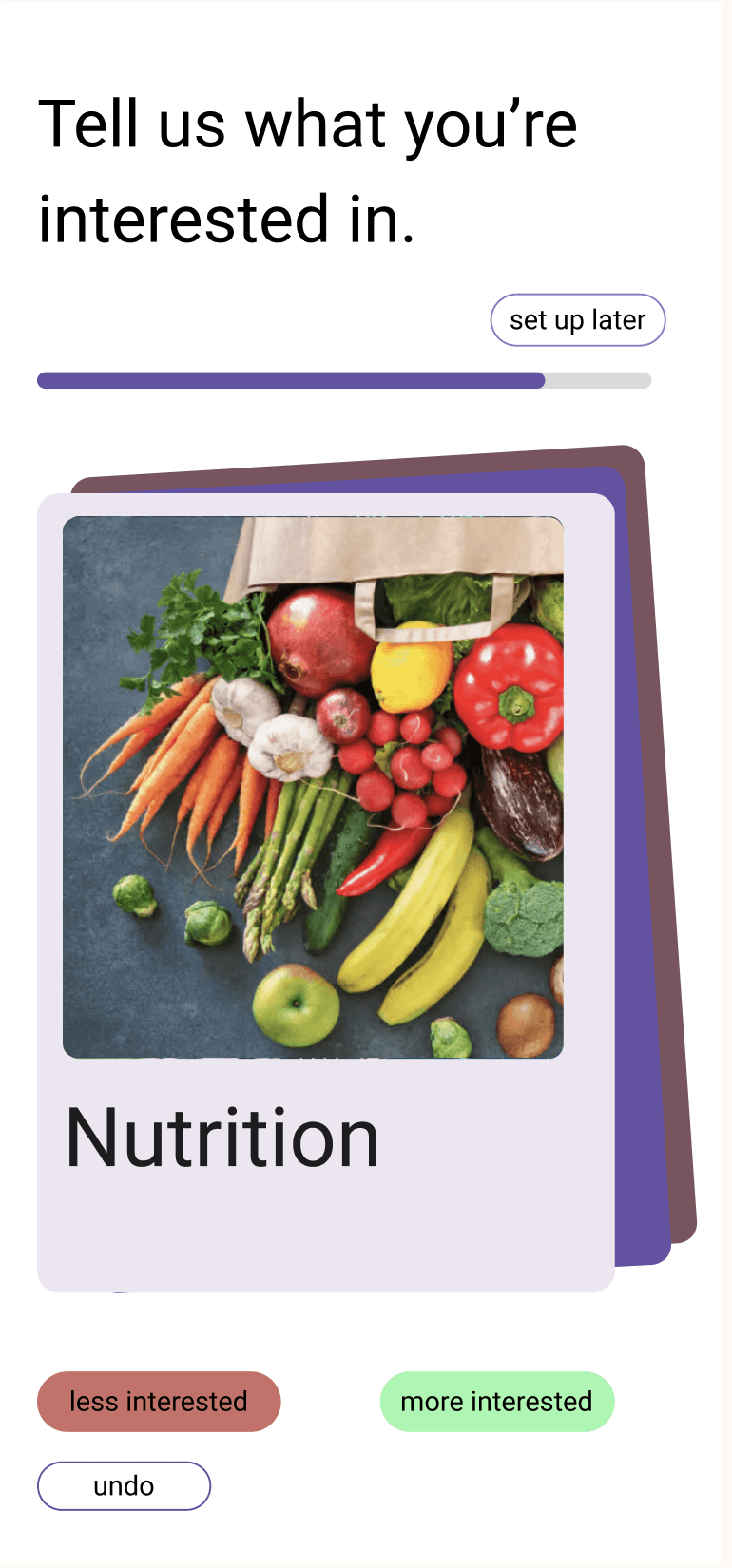
Onboarding Card Swiping

Users swipe through topics to personalize their feed when first opening the app.

Get users to a personalized feed faster.

Get users to a personalized feed faster.

Social Sharing

Users share articles and quotes, follow friends, and discover news through a shared social feed.

Encourage engagement with social motivation.

Encourage engagement with social motivation.

TRADEOFFS

Users preferred convenience over novelty.


Ideation

Health literacy features were implemented based on research insights.

CUT FEATURE

CUT FEATURE

CUT FEATURE

Onboarding Card Swiping

While 100% of participants wanted a personalized feed, they preferred letting an algorithm learn from their behavior over answering setup questions.

CUT FEATURE

CUT FEATURE

CUT FEATURE

Social Sharing

Users already shared articles through existing messaging apps, so the feature offered little added value for the required engineering effort.

ITERATION


Ideation

Health literacy features were implemented based on research insights.
Before
After
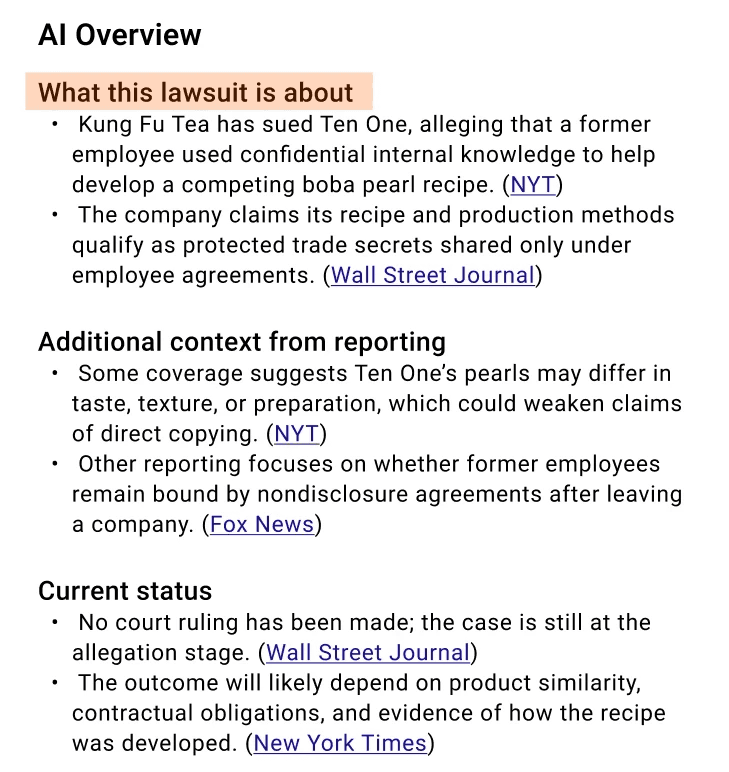
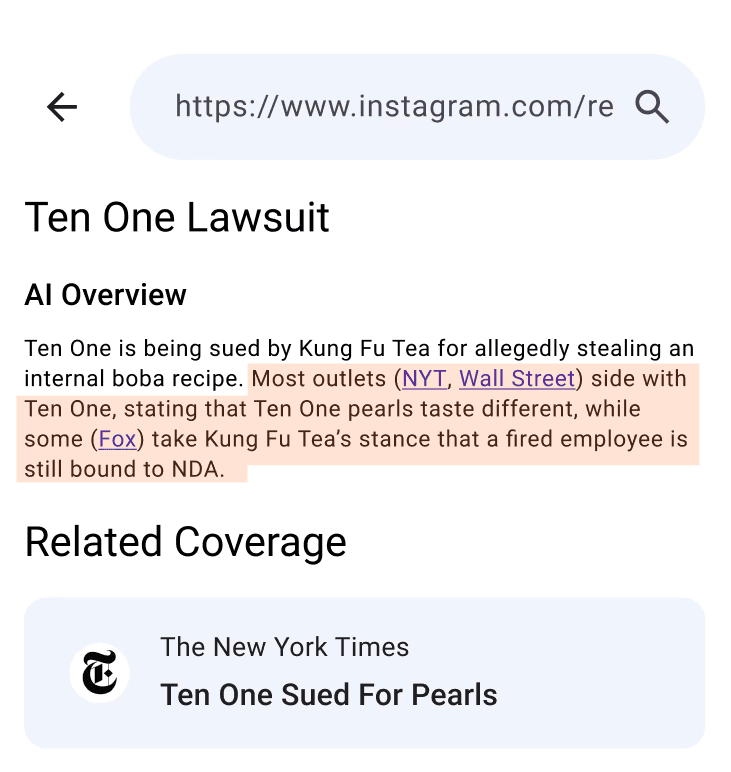
Users trusted AI when context was visible.

The summary evolved from a neutral report overview to a comparison of source perspectives.

Before
After
Users preferred credible headlines over eccentric ones.

Users felt quirky headlines were "forced" and irrelevant to the articles.


Learnings

Details build trust + AI requires the right role.

Details: I learned that building trust is less about when things go right, and more about when things go wrong. We tested AI summaries, copy, and failure states. Small variations had a large impact on user confidence. Constantly asking “what happens when it doesn’t work?” was central throughout the whole design process.

AI: I learned that Gen Z’s perspectives on AI are quite complex; users showed varying levels of skepticism depending on the implementation. Generated summaries were valuable in some features, but unnecessary in others. AI mainly needed to supplement users’ thought process and workflow, not replace them.

Thanks!

Thank you to Diane & Dean for mentoring us throughout this project and to Professor. Linda Borghesani for teaching the capstone course. To my team, affectionately known as Team LAVA, thanks for all your hard work!

made while listening to k-pop